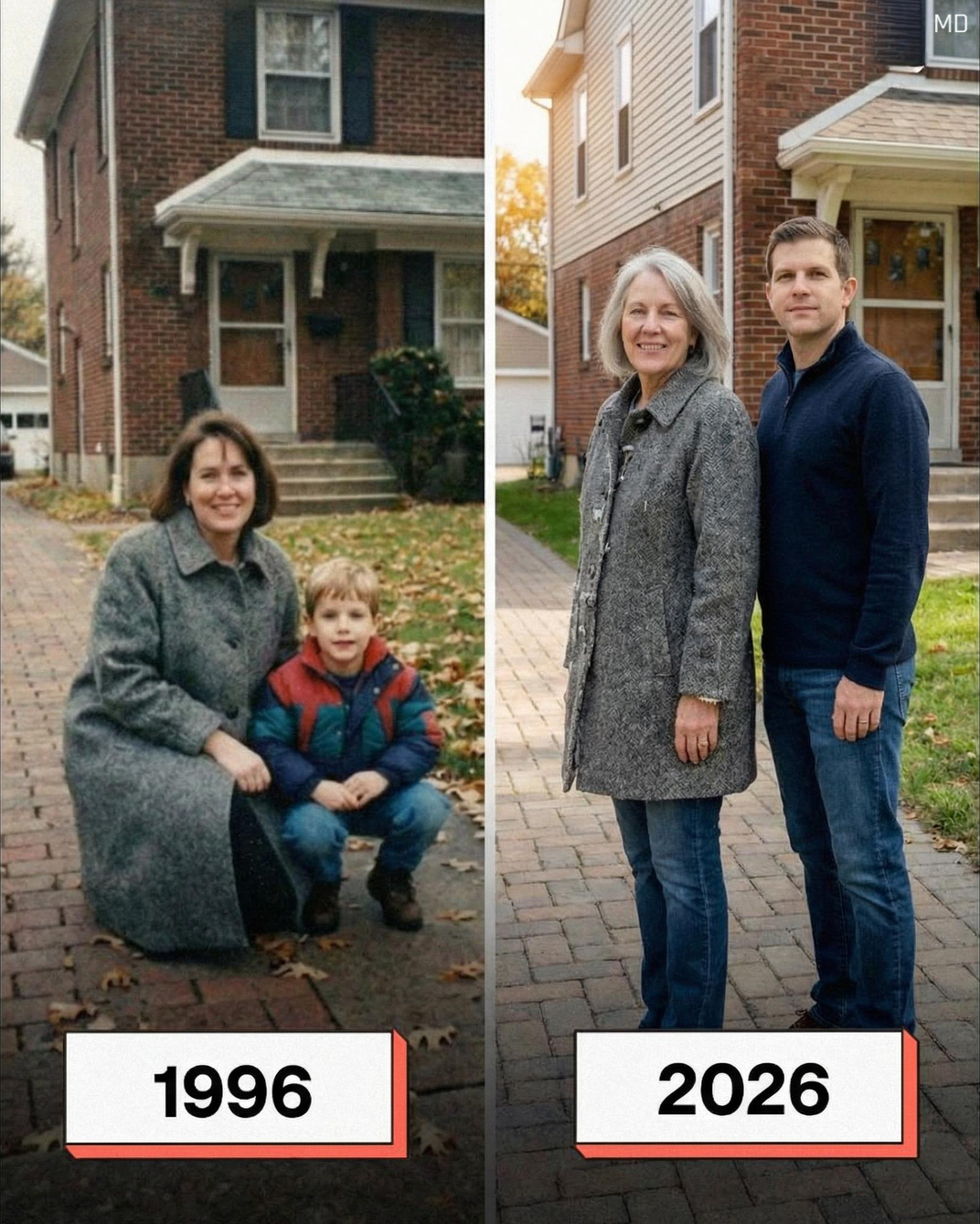
My mother wore the same charcoal-gray coat for thirty winters, and for most of my childhood, I was ashamed of it. The elbows were thin, the cuffs frayed, and the buttons didn’t match. When I was a teenager, I asked her to drop me off a block away from school so no one would see it. She would just smile gently and say, “It keeps the cold out, baby. That’s all that matters.” When I became an architect and finally had money, I bought her a beautiful cashmere coat—soft, elegant, expensive. She thanked me, hung it carefully in the closet, and the next morning wore the old one to work.
We argued about that coat more times than I can count. I told her we weren’t struggling anymore. I told her she deserved better. She would look at me with something unreadable in her eyes and quietly say she couldn’t throw it away. When she passed away unexpectedly at sixty, during the coldest week of winter, the coat was still hanging by the door of her small apartment. After the funeral, I went back alone to pack her things. I pulled it off the hook, ready at last to discard it—and realized it felt heavier than it should.
Inside the lining were deep pockets she had sewn herself. Tucked within them were thirty envelopes, each numbered in her handwriting. The first began, “Dear Jimmy, when you find these, I’ll be gone. Please read them all.” They were letters to my father, Robin—the man she once loved deeply. He had left years before I was born, promising to return after taking a job abroad. On the day he left, he wrapped that very coat around her shoulders to keep her warm. Weeks later, she learned she was pregnant. She wrote to him, but never received a reply. Years afterward, she discovered through a small newspaper notice that he had died in a work accident only months after leaving. He never knew about me.
For thirty years, she wrote him a letter every anniversary of his departure—telling him about my first steps, my school awards, my career as an architect. In her final note, she explained that she had found his sister still living nearby but had been too afraid to reach out. “You deserve to know you’re not alone,” she wrote. When I finally visited that small cottage, wearing the coat myself, his sister recognized the careful stitch along the collar—one he had sewn long ago. In that moment, I understood. My mother hadn’t worn that coat out of poverty or stubbornness. She wore it because it was the last thing that had ever held her from the man she loved. I spent half my life embarrassed by it. Now I know: some things aren’t rags. They’re proof of love that endured.